
238 ☼ How I Document A Community
What I learned from photographing 102 startup founders
Dear friends,
Last Wednesday at 9.30am in the morning, I stood on a stage at Pakhuis De Zwijger in front of 300+ people and handed my new zine to the Dutch Minister of Economic Affairs and Climate Heleen Herberts.
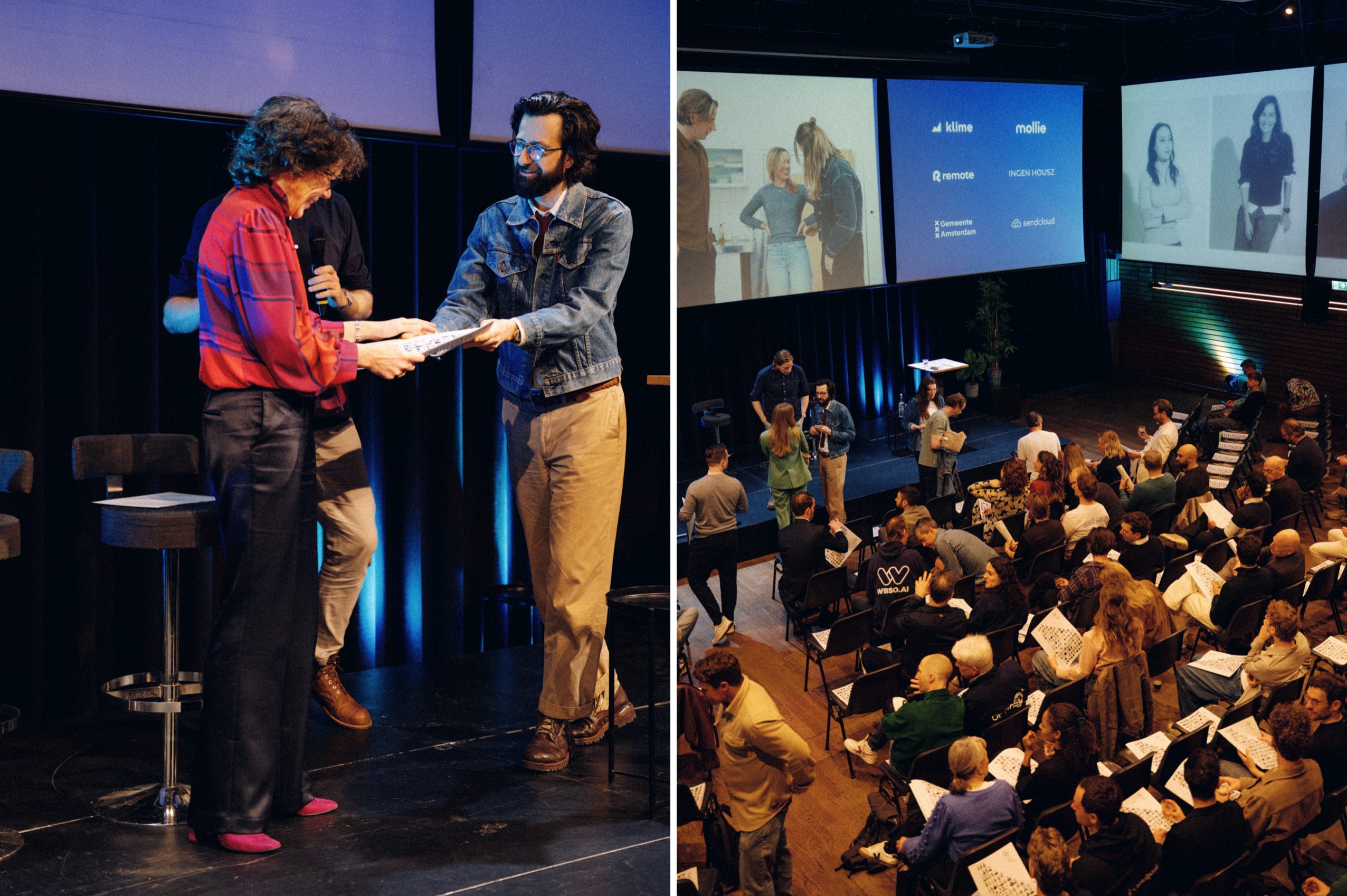
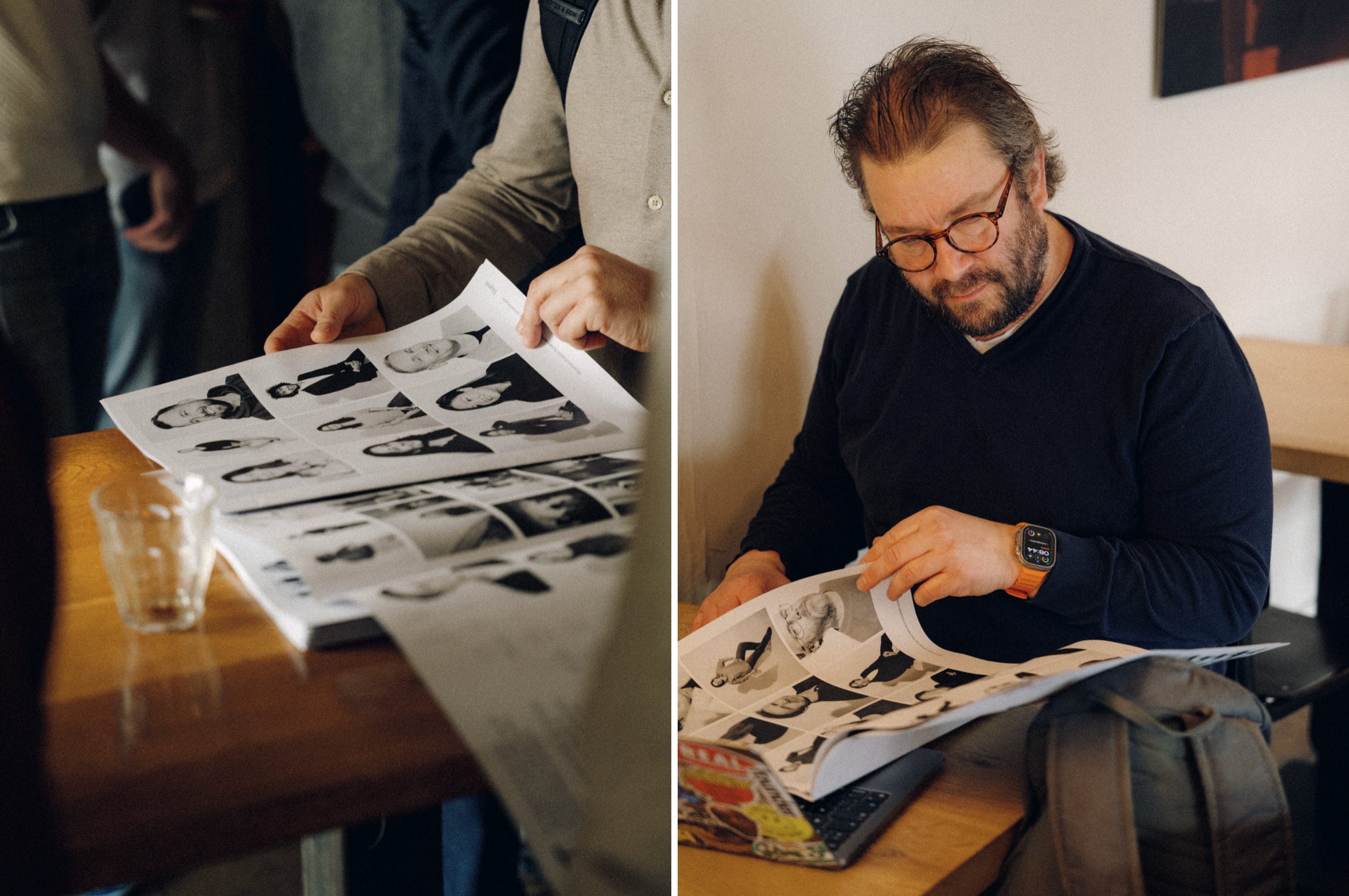
The zine weighs almost nothing. A small run of 500 copies, a beautiful object designed by my friend and longtime collaborator Maxwell George. Inside are 102 portraits of Dutch startup founders and builders, an essay by my project partner Robert Gaal, behind-the-scenes images by Harry Orange, and 16 policy proposals we put together based on the conversations Robert had each of the 102 people while I was photographing them.
Handing the zine to her was one of the more meaningful launch moments of my creative life so far and I’m excited to tell you why that is today.
How Vliegwiel happened
Vliegwiel (Dutch for “flywheel”) is a project Robert and I co-conceived last year. Robert is a longtime tech entrepreneur and a passionate advocate for the Dutch startup ecosystem. I’m a photographer who keeps making what I’ve come to call Community Documentary projects. We looked at the way this community gets covered in the press, which is mostly through the lens of a few cartoonishly wealthy men, and we knew the reality was different.
The reality is a huge, varied group of people who work incredibly hard and sacrifice safe choice, who come from everywhere, who look like the people you run into at your neighborhood grocery store. We wanted to give that reality a face. Actually, 102 faces.
So over the course of two marathon days, I photographed 102 Dutch founders and builders. All ages, all backgrounds, all stages of their journey, working on everything from climate tech to food to hardware to software to biotech. Robert asked each of them the same question during their shoot:
What should the Netherlands do to make startups more successful?
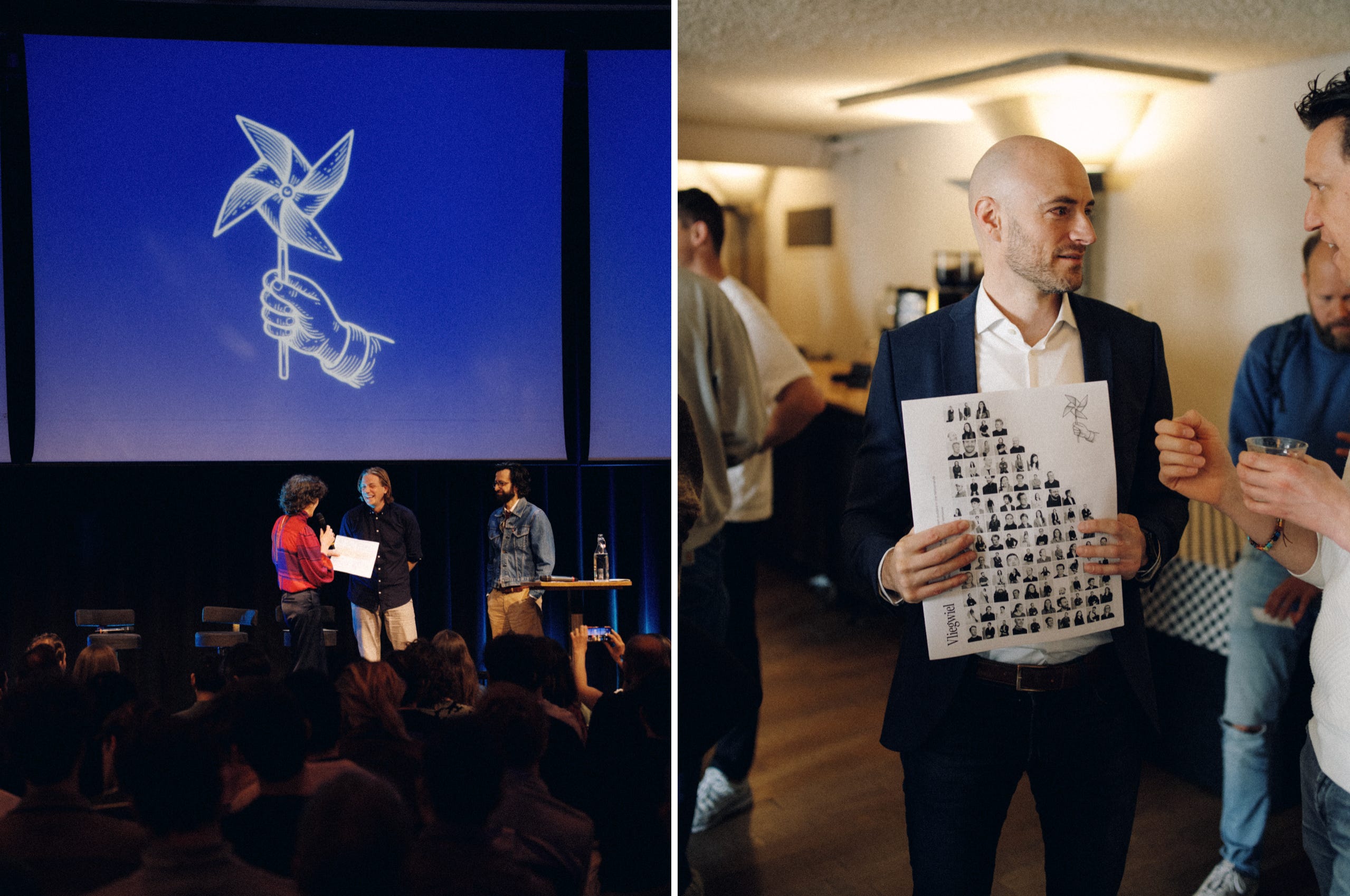
The answers became the foundation for a page of 16 concrete proposals, organized into four categories: Talent, Policy, Investment, and Culture. We had the ambition to get the zine into the hands of someone who could do something about it.
What I love about shoots like this
When you photograph 102 people from one community, you start to feel something that’s impossible to feel from photographing just a few and one at a time. You start to feel the shape of what moves them. You start to hear the same hopes and frustrations coming from completely different mouths, and you can get a feel for what the community actually is, underneath the headlines and the surface stuff.
With the Vliegwiel founders, something that came up in each conversation was this relentless and unreasonable commitment to solving a problem. It’s the same quality I recognize in the artists and photographers I admire most. It’s a particular kind of stubbornness that refuses to let go of a question once it has you. I walked away from almost every shoot thinking, okay, these people are my people, even though we work on very different things and we have very different lives.
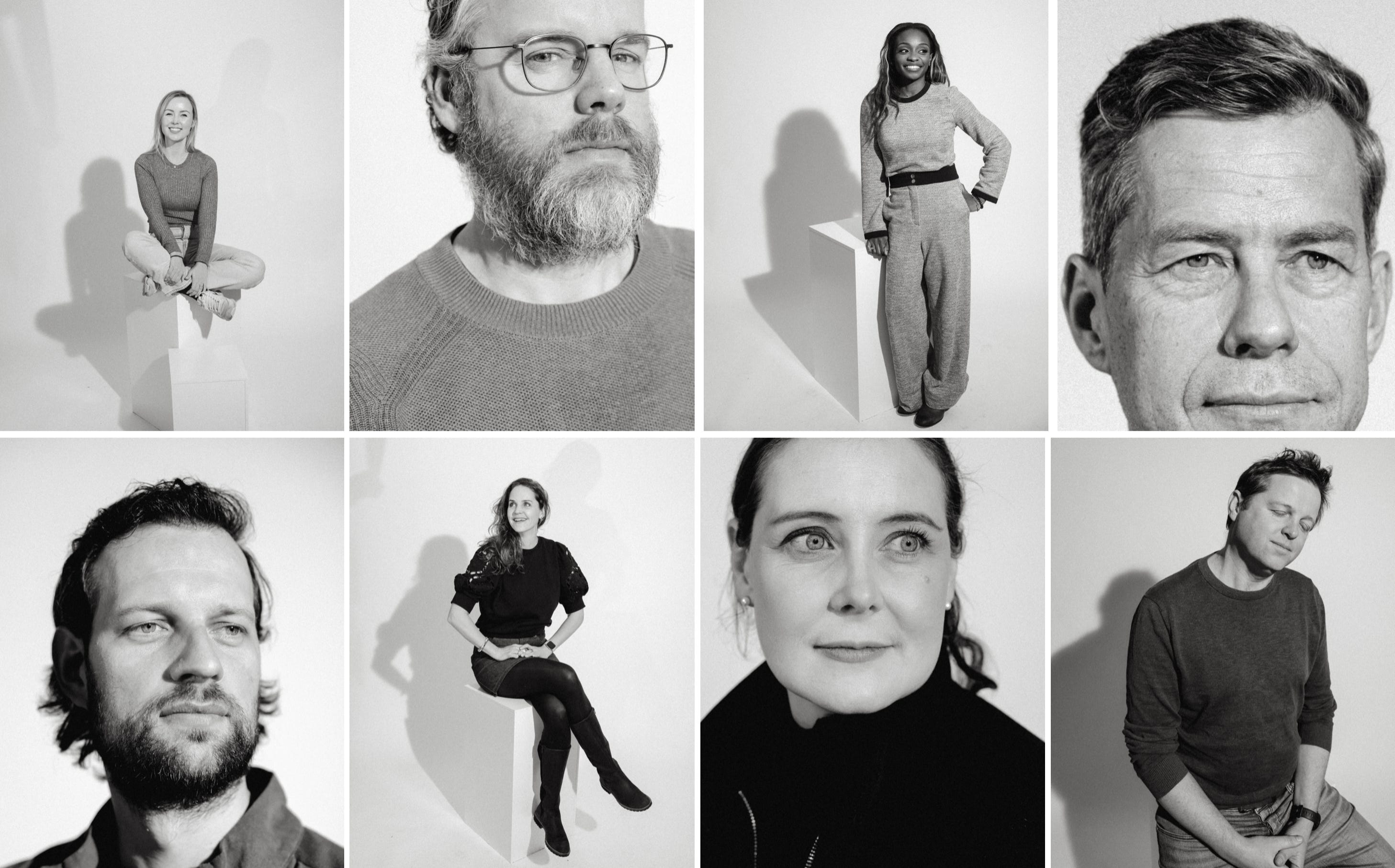
The other thing I love about shoots like this is that most of the people I photograph for Community Documentary projects are not people who get photographed a lot. They walk into the studio or their office and they apologize. They tell me they’re not photogenic. They tell me they hate photos of themselves. They’re nervous, they’re busy, they fidget, they pull at their collars. This happens over and over and over.
And then, when I show them the result on the monitor, I see watch their shoulders relax and watch their face change into a smile or a relieved surprise. I watch them realize that the version of themselves they’ve been carrying around in their head, the one that isn’t photogenic, was just kind of not true.
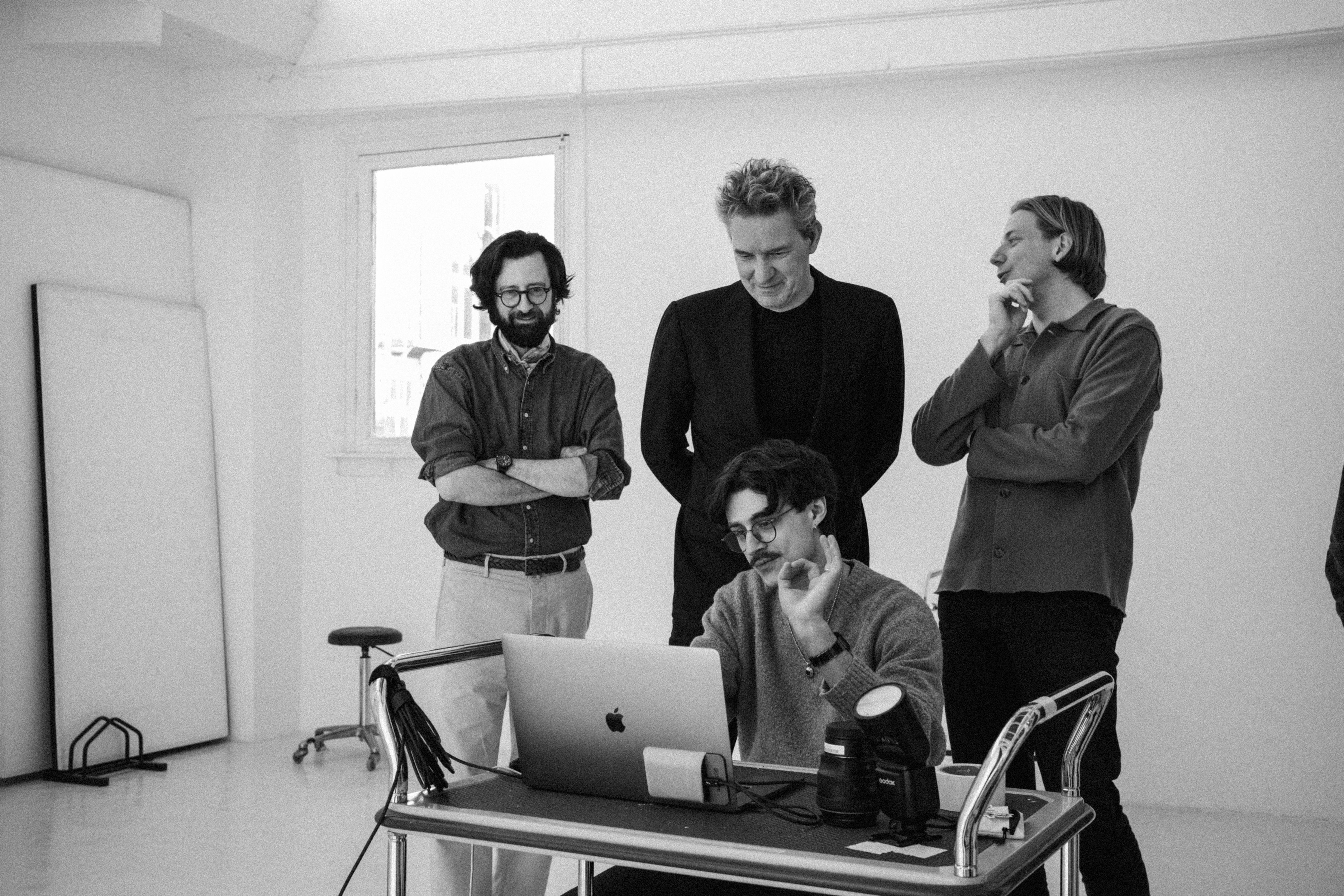
After the Vliegwiel shoots went out, I started getting messages. Someone asked me to get the file early so she could send it to her mother. Someone told me it was the first picture of themselves they had ever actually liked. Someone told me it was the first time they had felt comfortable while being photographed. These messages are such gifts for me as a craftsperson and a human. It means more than almost anything else.
I keep saying this, but it’s true: getting to give someone that moment is one of the greatest privileges of my job. It has nothing to do with gear and everything to do with slowing down, being present, and actually seeing the person in front of you.
Back to the Minister
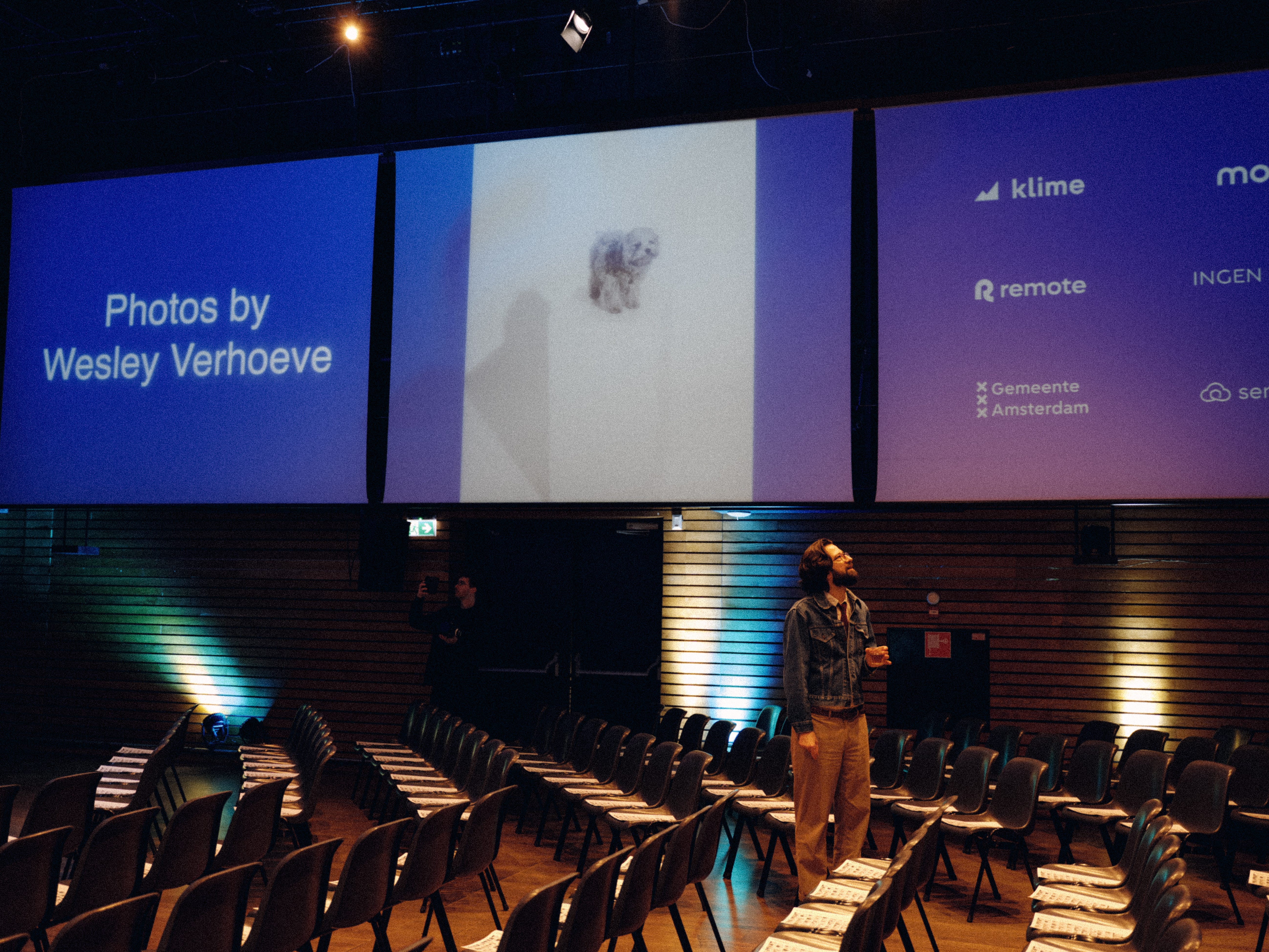
So, on April 1st, Robert and I got on stage at Pakhuis De Zwijger and 300+ people from the Dutch startup community showed up. We talked about the project. We opened up the floor and Robert asked people to share their own answers to the question we had asked all 102 subjects. The stories people told were honest and transparent, and the room listened.
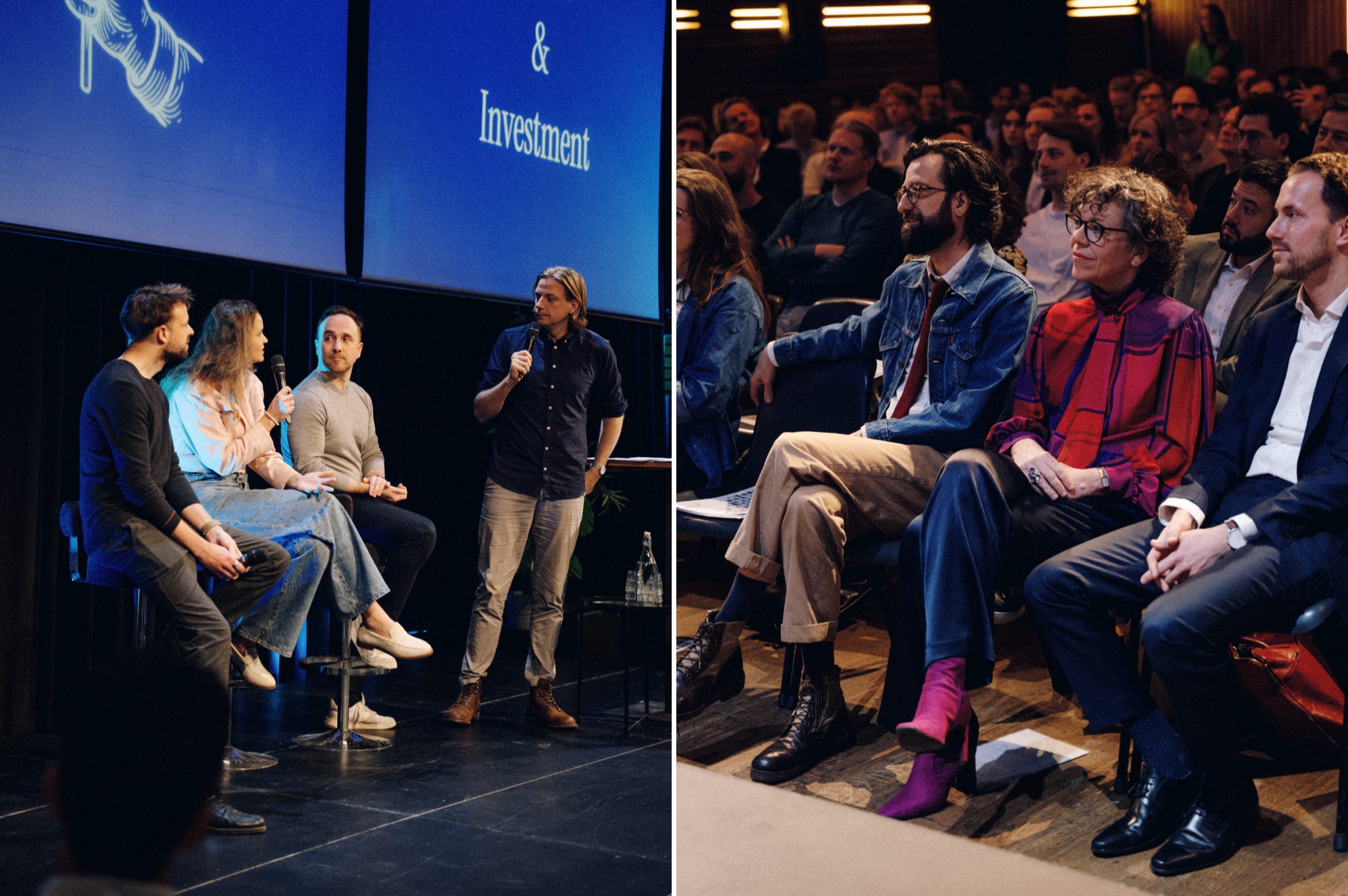
Then we welcomed Heleen Herbert, the Dutch Minister of Economic Affairs and Climate. In the Dutch system, her portfolio covers pretty much the entire world these founders live in: economic policy, entrepreneurship, innovation, and climate. Her job and this community’s work overlap almost perfectly. We presented her with the very first copy of the zine on stage.
Afterward, we hosted a smaller, more intimate conversation between the minister, Robert, me, and a handful of the entrepreneurs we had photographed. The minister and her team took notes. A lot of notes. They listened. They asked follow-up questions. They said, clearly and repeatedly, that they wanted to be an ally to this community for the benefit of the country
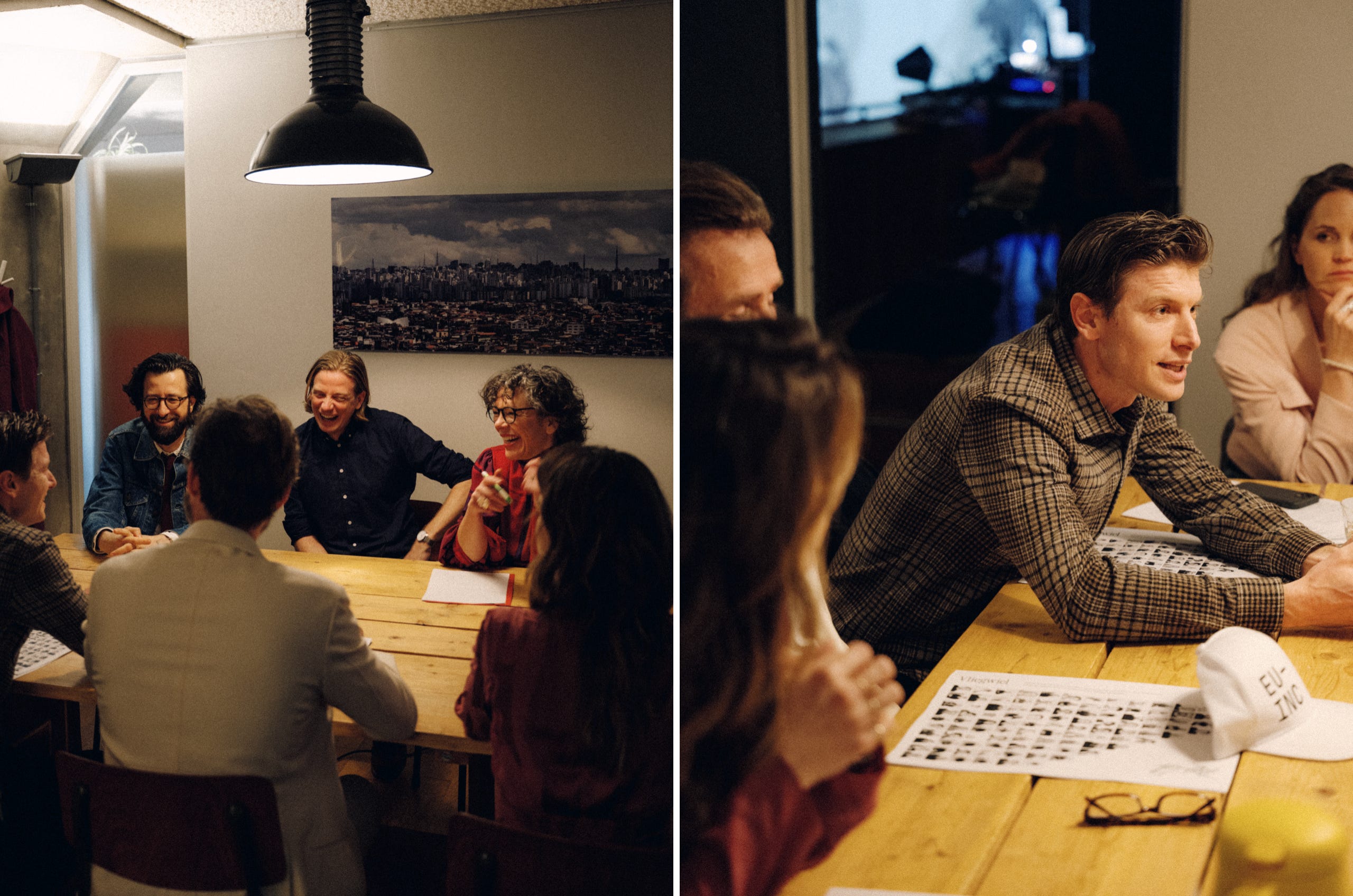
I want to tell you what that moment felt like for me personally, because I’m still processing it. I grew up in a small town in a rural, long-ignored part of the Netherlands. Then I moved to New York when I was still a youth and stayed there for twenty years. I built a life and a career there. Coming back home and finding myself on a stage in Amsterdam, handing a zine I made with one of my best friends to a minister of my own government, who was sitting there taking notes about what the community had to say, I don’t have clean words for it. It gave me so much fuel. Fuel for more projects, more conversations, more of this particular kind of work.
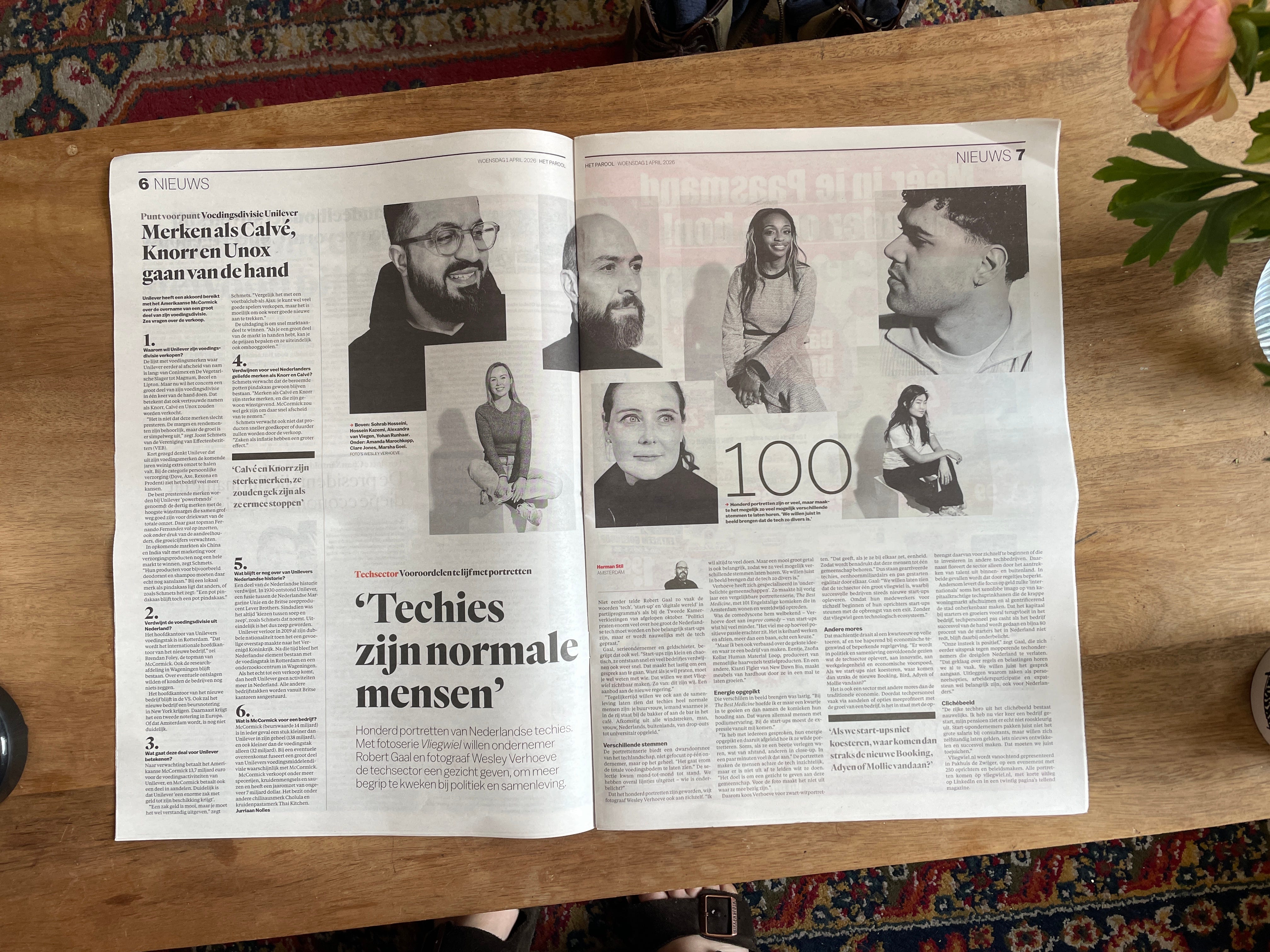
One last exciting thing was that that same morning, Het Parool, ran a two-page spread about the project on page six, including seven of the portraits. Het Parool regularly wins international awards for newspaper design, and getting to see the work laid out in their pages was an honor.
What Community Documentary actually is
I want to zoom out for a second and talk about why I keep doing this. I started making Community Documentary projects in 2013 with One of Many, which was about the creative communities of twelve cities across the United States. Around 600 people. It was the first time I felt the particular magic of photographing a lot of people from one world and watching a portrait of that world emerge from the collection.
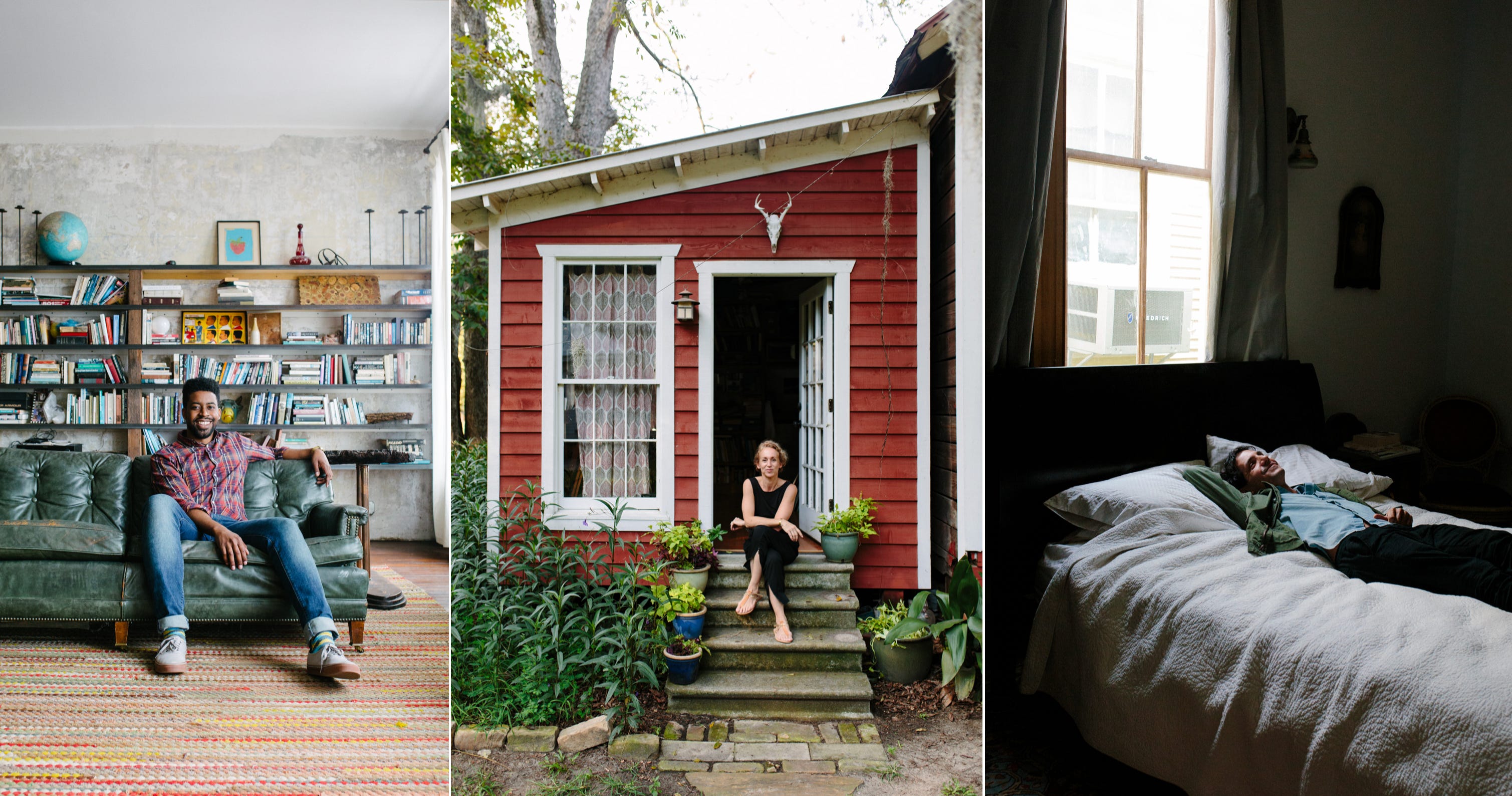
At that time, I didn’t have this category name for it yet. I didn’t even have a plan. I was just trying to make sense of the world around me and a camera gives me permission to ask questions and dig deeper.
Since then, the format has become the thing I keep returning to. Last year it was The Best Medicine, about 101 comedians. This year it’s Vliegwiel. Later this year, two more are launching: one about Ruigoord, the iconic and historic artist village near Amsterdam, and Creatives In/AMS, which I’ve been working on for five years and which is a spiritual sequel to One of Many, this time focused entirely on the creative community of Amsterdam.
The format is simple.
Pick a community you want to understand.
Photograph an unreasonably large number of community members, with care, one at a time.
Ask them genuine questions.
Put the work together into something physical.
Gather everyone in a room. Celebrate them. Give them something they can hold.
What I’ve learned from doing this over and over is that communities recognize themselves when you show them to themselves. And sometimes, the people who can make a positive impact about the community’s future may listen in as well.
Giveaway — Your Turn
Here’s my question for this week’s giveaway:
What community, local to where you live, would you love to document? It can be a group of craftspeople, a subculture, a neighborhood, a profession, a hobby club, anything. Tell me who they are and why they pull at you.
Leave your answer in the comments and inspire others with your curiosity. I’ll pick one reader at random to receive a copy of the Vliegwiel zine (which is not available for sale anywhere, the entire run of 500 has been distributed within the community) along with a goodie bag including some rare film and a few other surprises.
NEXT WEEK: I’ll write about my client work as a portrait photographer for startups and companies, and why those sessions have become some of my favorite work to do. It connects directly to what I wrote above about watching people’s shoulders drop.
Warmly,
Wesley
Thank you, as always, for reading. If this issue moved you, the best thing you can do is share it with one friend you think would appreciate it.
NEW WORKSHOP ON SALE NOW
May 23 & 24, London — Shane Taylor (Framelines) and I are co-hosting a day-long workshop for photographers who care about their work and could use help with the questions:
What am I actually trying to say?
How do I turn that into a real project?
Morning sessions, communal lunch, afternoon street shooting. Info and tickets at developworkshops.com.
The price is €275/£250 and Process Photo Club members get €75 off (just email me at hello@wesley.co and I’ll send you a discounted booking link.) Not a member yet? Check out the PPC perks page or click below.
This Week’s Camera + Tools
Camera: Studio: Canon EOS R5 and the Canon RF 24-70 mm f/2.8 L IS USM.
Lab: All my film is developed with love by Carmencita Film Lab. Use code “PROCESS“ for a free upgrade.
A Few Ways To Support This Work
If Process adds something to your week, here's how to help keep it going: grab a copy of my photo book NOTICE Journal Volume One or the Process Workbook series. Every physical order includes a limited edition Creatives In/AMS preview zine, a surprise, and stickers.
Process Photo Club members get 40% off NOTICE and 100% off all four Workbooks. Not a member yet? Join here.
🗃️ Browse the Process Archive.
I live in Tuindorp Oostzaan, a small very intense community in the north west of Amsterdam. Since it started in the 1930’s as its own city, it has a very strong identity and a chip on its shoulder. The housing is all a very similar architecture that gives it a strong identity. They’re not Amsterdammers, not even noorderlingen, they’re tuindorpers. But that’s changing like crazy. While there are people who have been living there for decades or even multiple generations, there are also lots who have just moved there from other parts of Amsterdam or the Netherlands, or even, like me, from other countries. There’s even a new(ish) refugee centre for Ukrainians who have joined the community.
I’d love to do a double set of portraits; the old timers and the new wave, asking both what the community means to them and how the changes are affecting their lives.
I've been dreaming of creating something (exhibition,zine or book) of creative mothers local to where I live on the Fleurieu Peninsula in South Australia. There's a lot of us here, juggling motherhood and creative practices in the cracks of parenting. I'd love to explore the connection between where we live, raising children and making art