
242 ☼ What Agnès Varda Taught Me About Photography
Ten reflections from twenty years of looking
Dear friends,
“In my films, I always wanted to make people see deeply. I don’t want to show things, but give people the desire to see.”
That’s Agnès Varda speaking. I came across the quote recently and I loved it.
There’s a difference between showing someone a thing and making them want to see.
Showing is a one-way transaction. The desire to see is something else. It’s contagious. It’s the part of photography I care about most.
Varda spent her life pointing her camera at people or ideas that she felt the world wasn’t paying enough attention to. She didn’t do that to inform, but to infect us with her curiosity. After watching her films, you walk outside and might find the world looking just a little different. A stranger at a bus stop suddenly looks like a possible portrait.
This desire to see, and the curiosity that sits at the foundation of that desire, is central to my personal work outside of my portrait and client work. There are things in the world I will always be drawn to. Because they inspire that curiosity and my compulsion to interpret and re-contextualize what I see.
One of those things I am always drawn to is reflections I encounter out in the world. For this issue, I focused on the latter and searched my archives using Excire and typing in the keyword: reflections .
I picked ten of my favorites out of twenty years of archives. Here’s the first one.
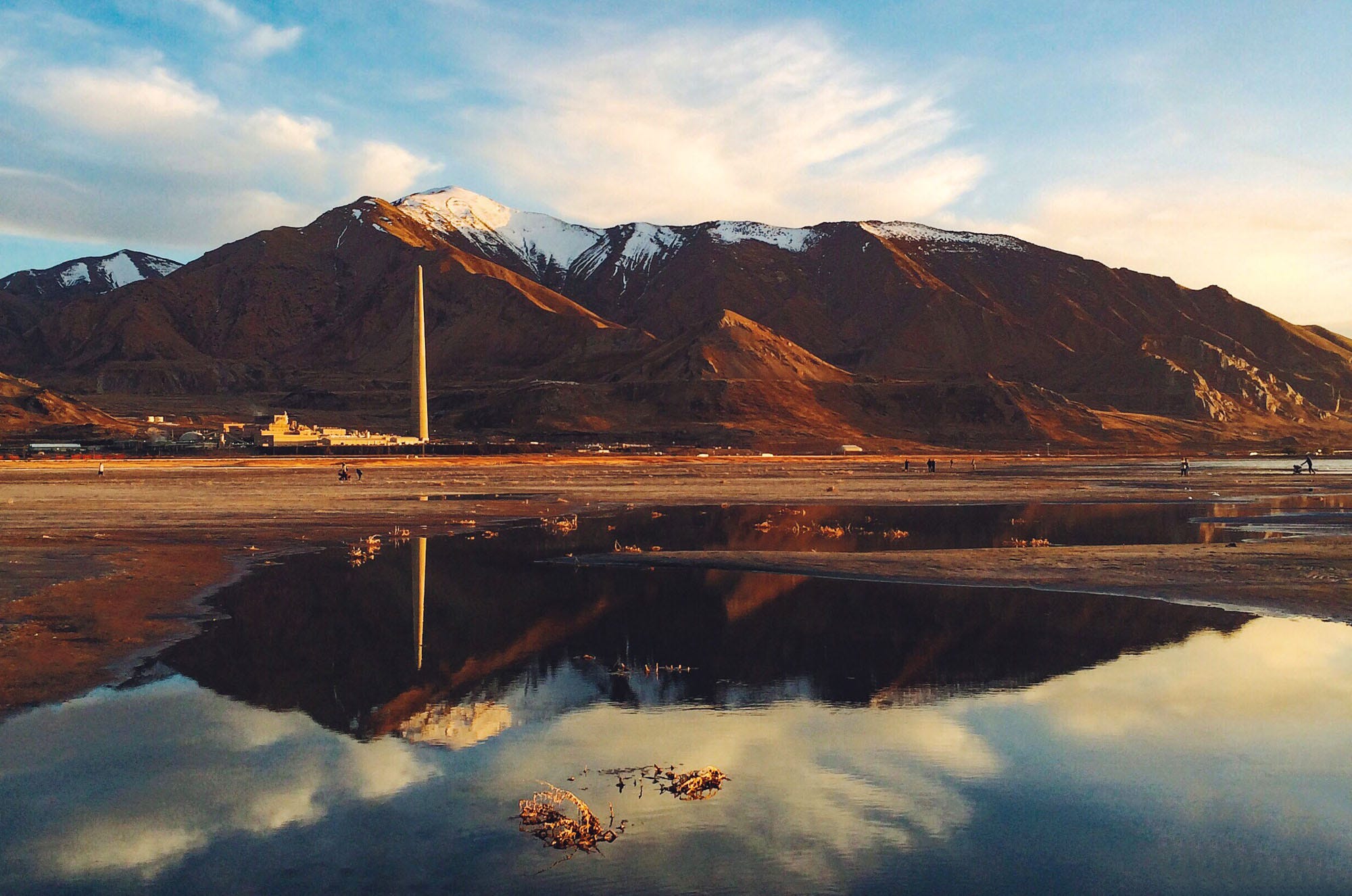
I took this photo in Utah over ten years ago when visiting the Salt Flats outside of Salt Lake City. They’re magical. It was so quiet. I was so still.
To reflect on reflections is perhaps a bit meta, but putting these ten images together into a little series was a fun exercise in re-contextualizing. It’s the world looking at itself and me looking at myself, sometimes literally like in this half-frame diptych.
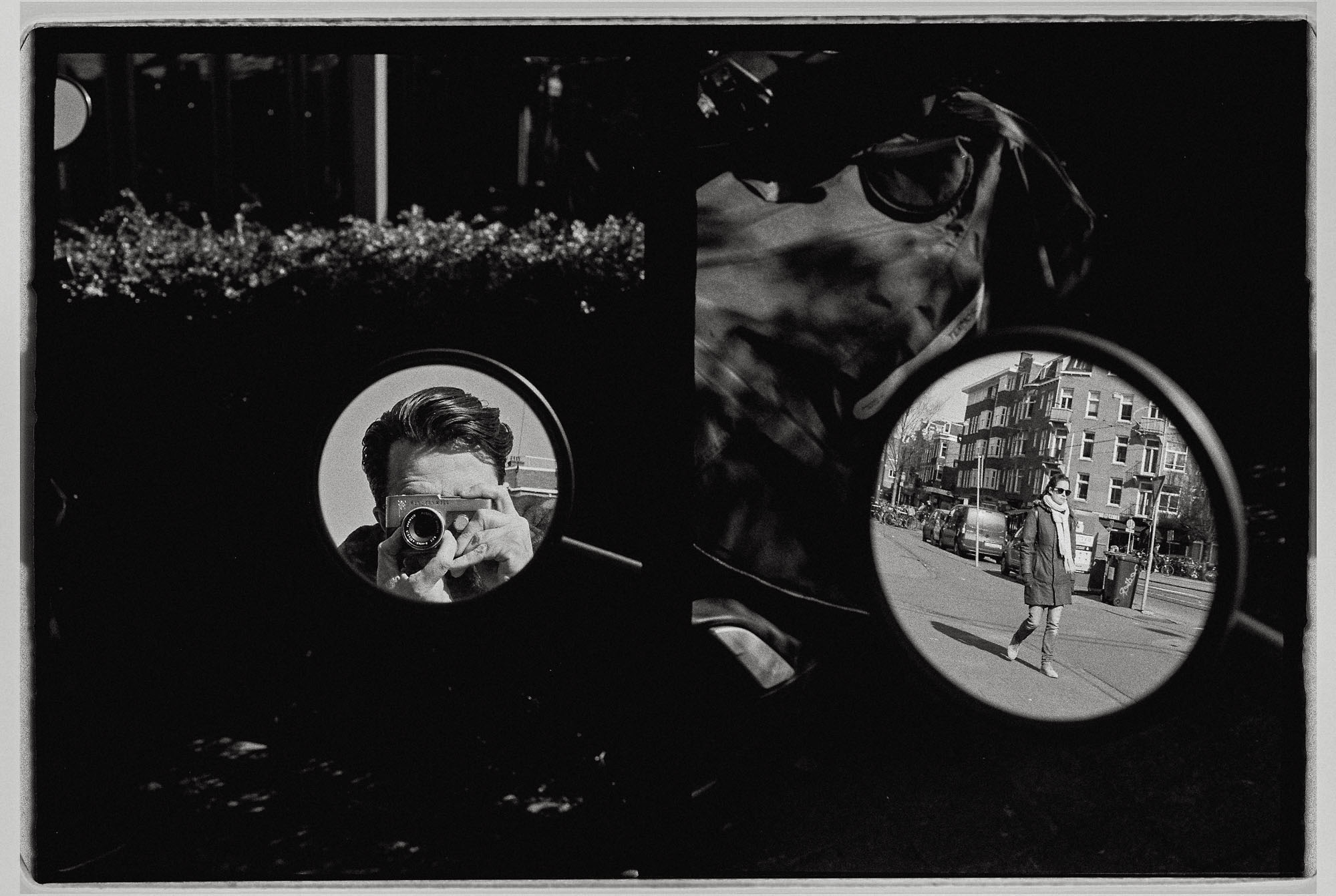
During the first three springs I lived in Amsterdam I was processing lots of big life changes. I walked the streets and photographed as my way of reflecting on it all and ended up being obsessed with using scooter mirror’s to capture moments.
I think the reason I kept taking these pictures is that a reflection forces me to see twice. Once for the thing in front of me, once for the thing behind me, and a third time for the strange new image that exists only because of the surface in between.
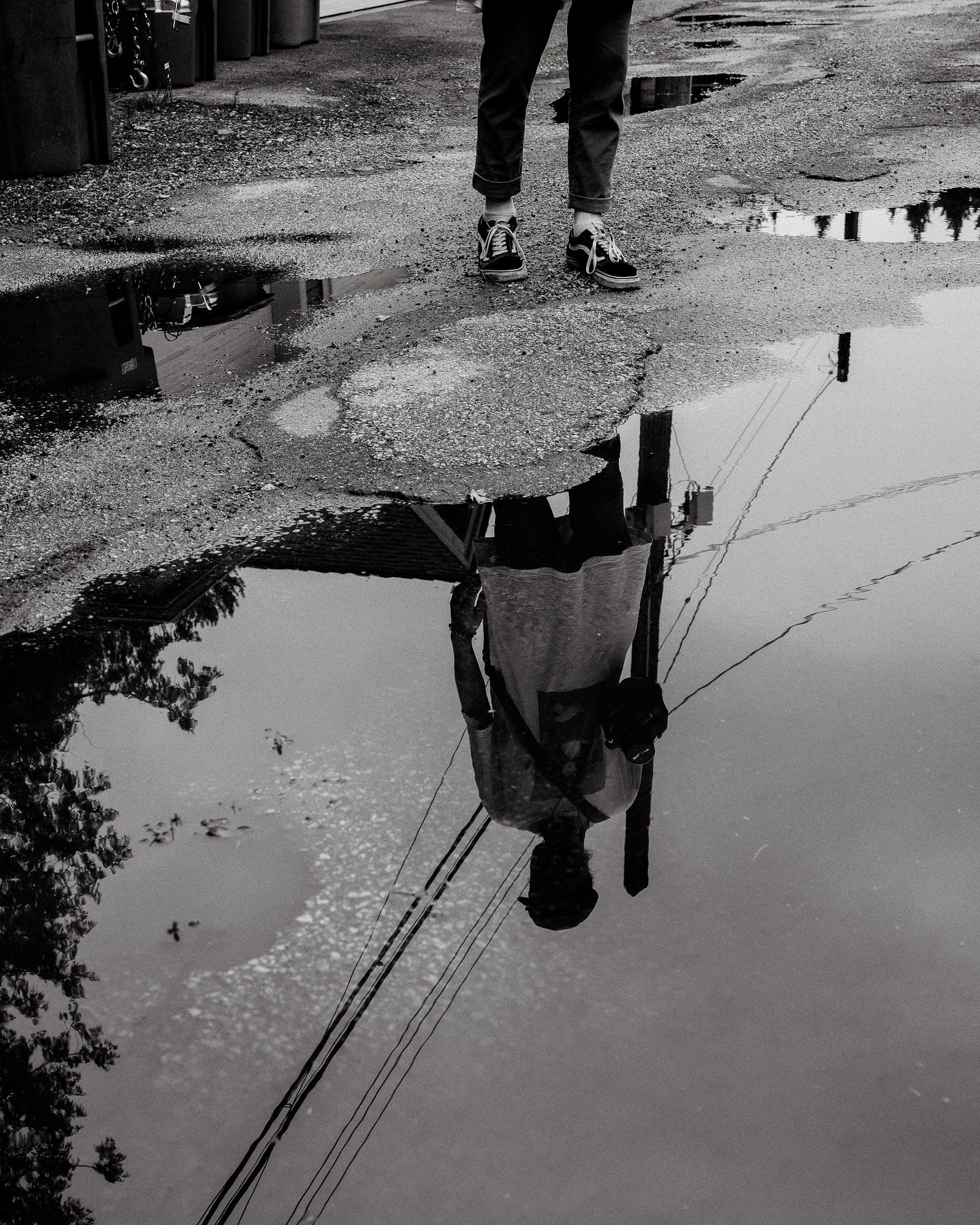
This one was taken in Vancouver during the first few months of the pandemic. My friend Alex had just moved there and even though everything was on lock down, we could still go on socially distant photo walks together.
Reflections make me to slow down. They ask that I notice that the world is layered, even when it looks flat. That a different perspective on a familiar sight can provoke excitement. I think this is what Varda meant when she said what she said.
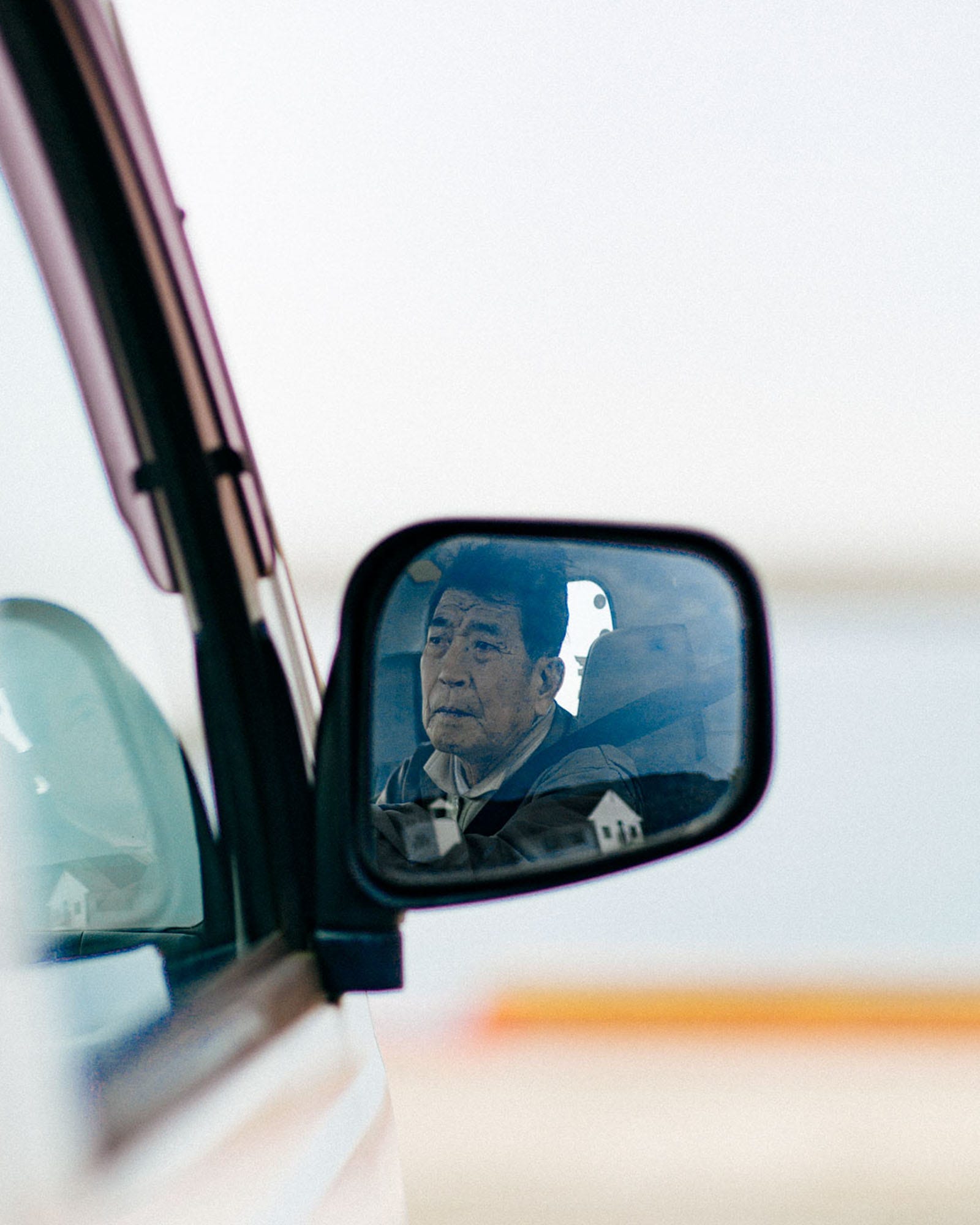
This one was taken during the quietest of morning moments on the Japanese island of Naoshima. I wrote about it in more detail in Process 213.
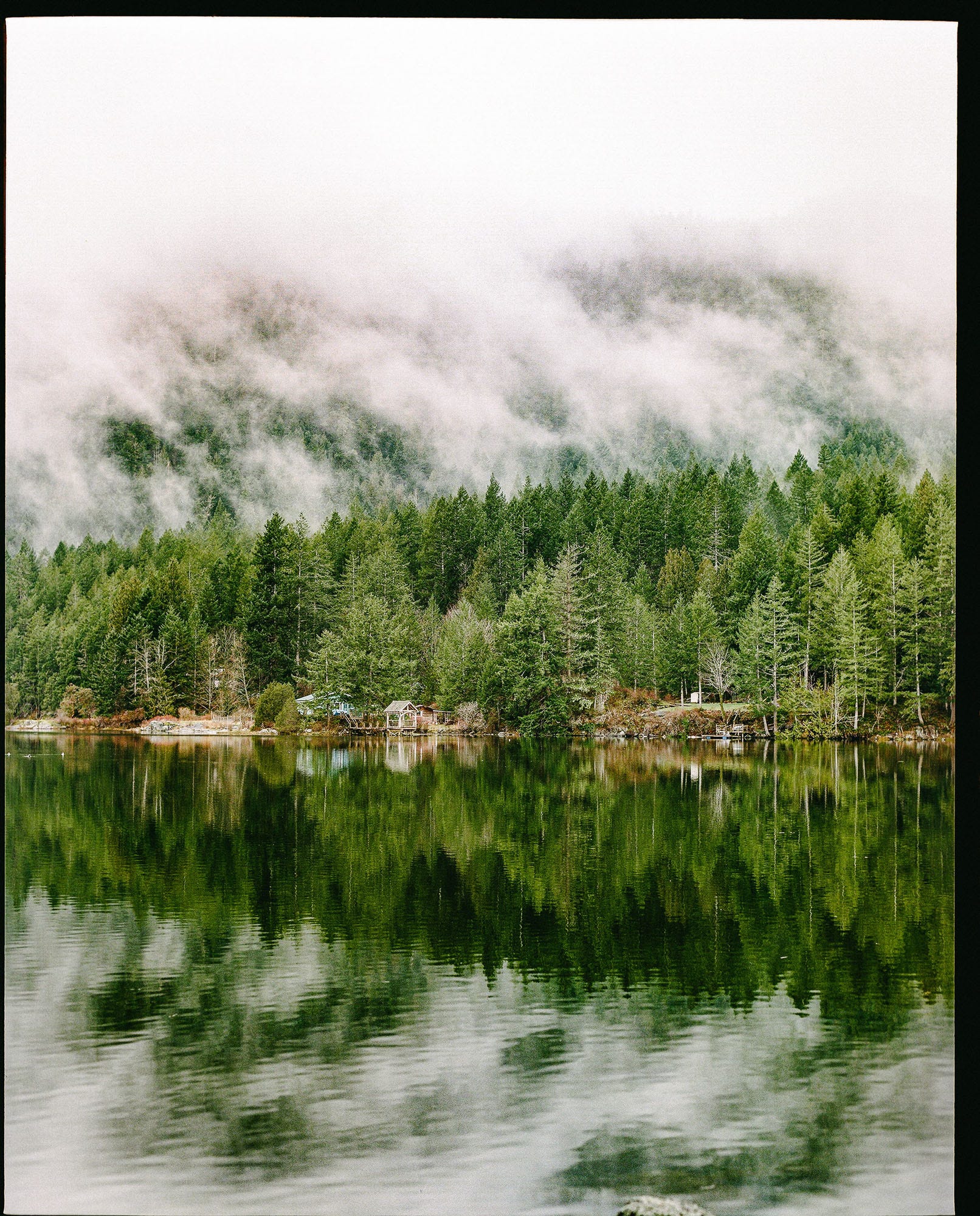
During my time in Vancouver, I was lucky to be able to explore some of the stunning nature outside the city. This was the view mere feet away from the cabin we stayed in on the Sunshine Coast. It brought me a lot of calm. I stared at it for a long time before taken this photo. Again, a very quiet moment and being in awe of natural beauty.
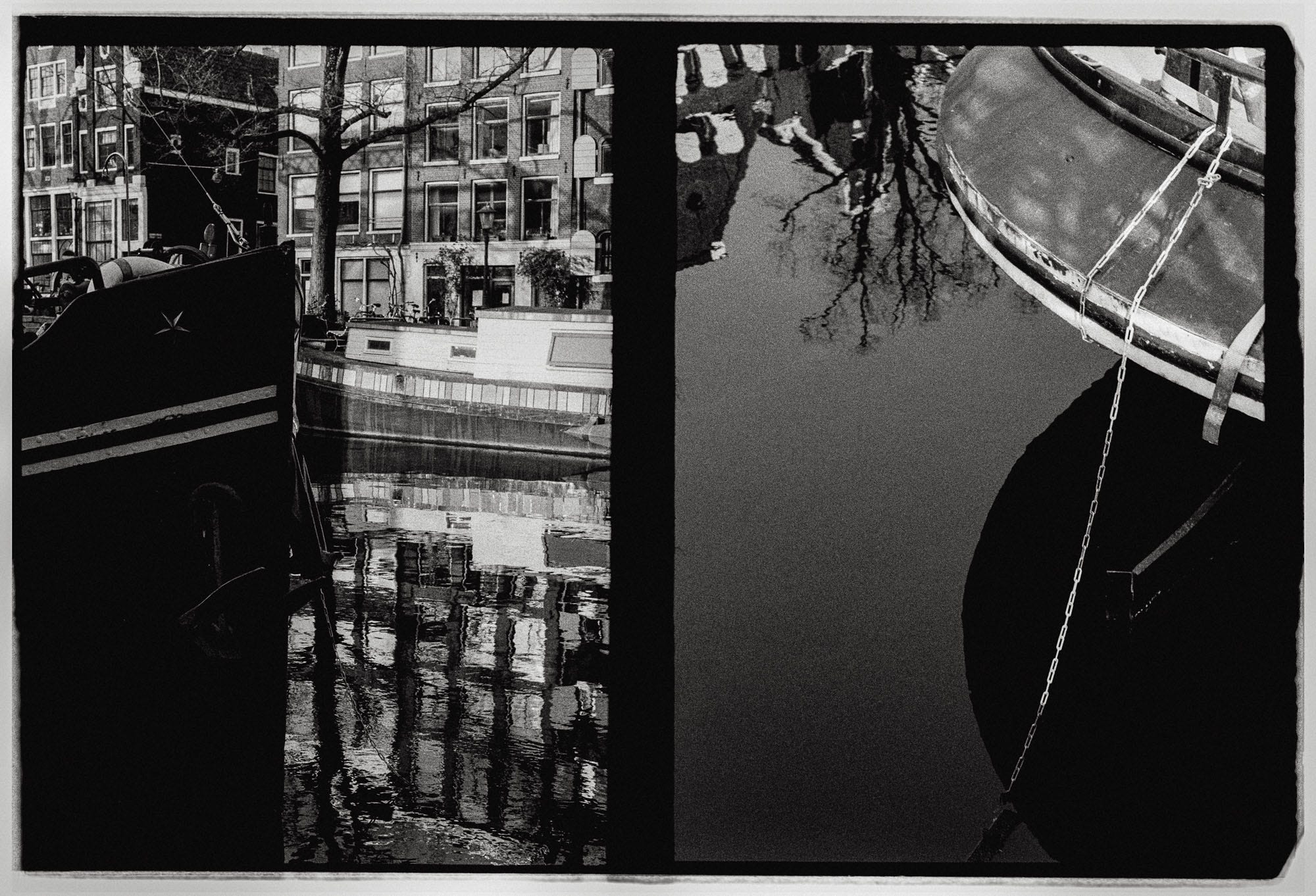
This is an outtake from the series I made in Amsterdam when I first moved here and was going through said life changes. In addition to all the literal mirrors, the water in the canals was another favorite subject for me to re-contextualize my thoughts in this new city. The best ones were collected in NOTICE Journal, Volume One.
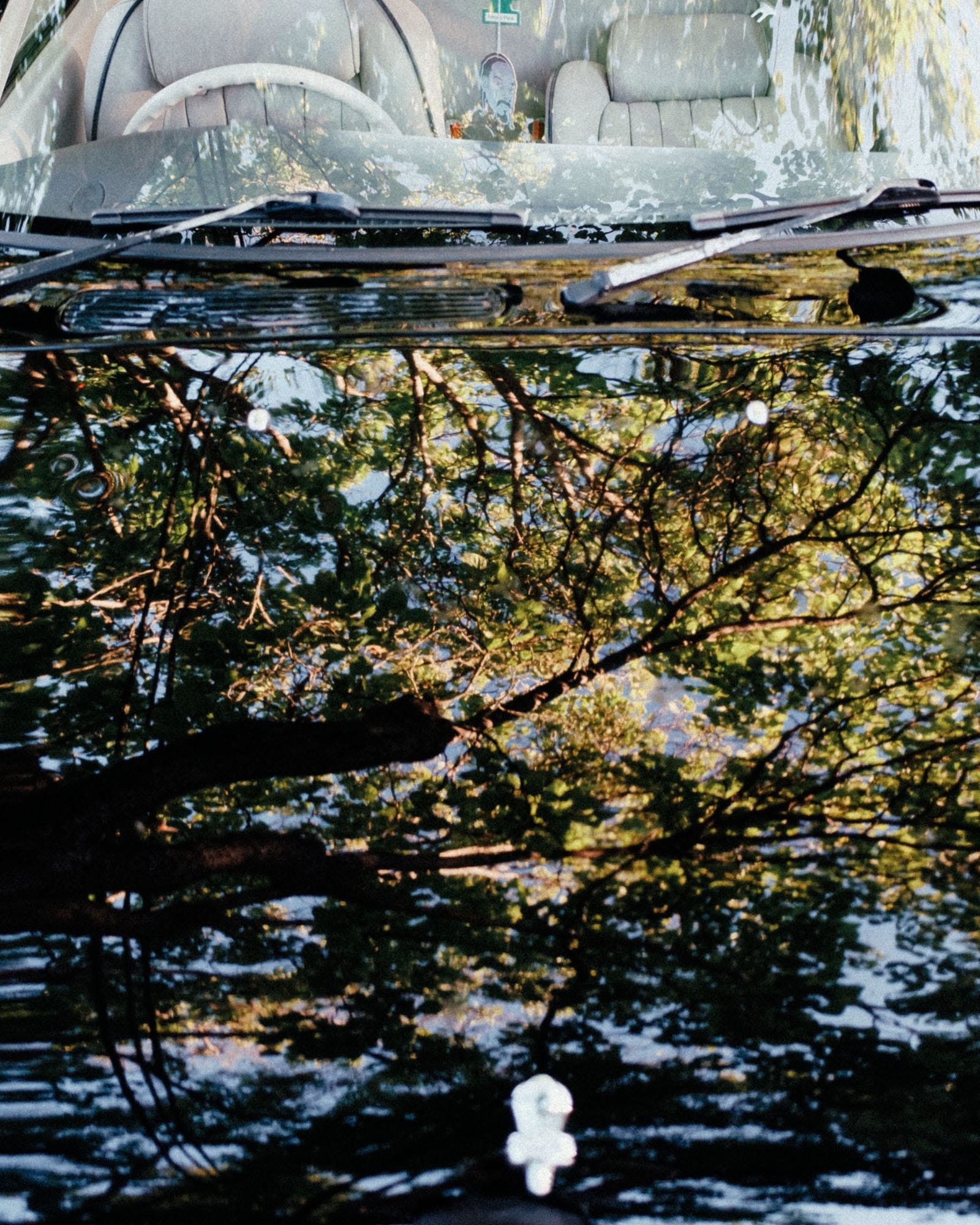
While I was in Vancouver, I went on a long daily photo walk for 123 consecutive days. I would often pass by the house of what I assume was a passionate classic car fan. I never got to meet him, but I photographed many of his beautiful car. The body of work I made during this period became my first photo book NOTICE.
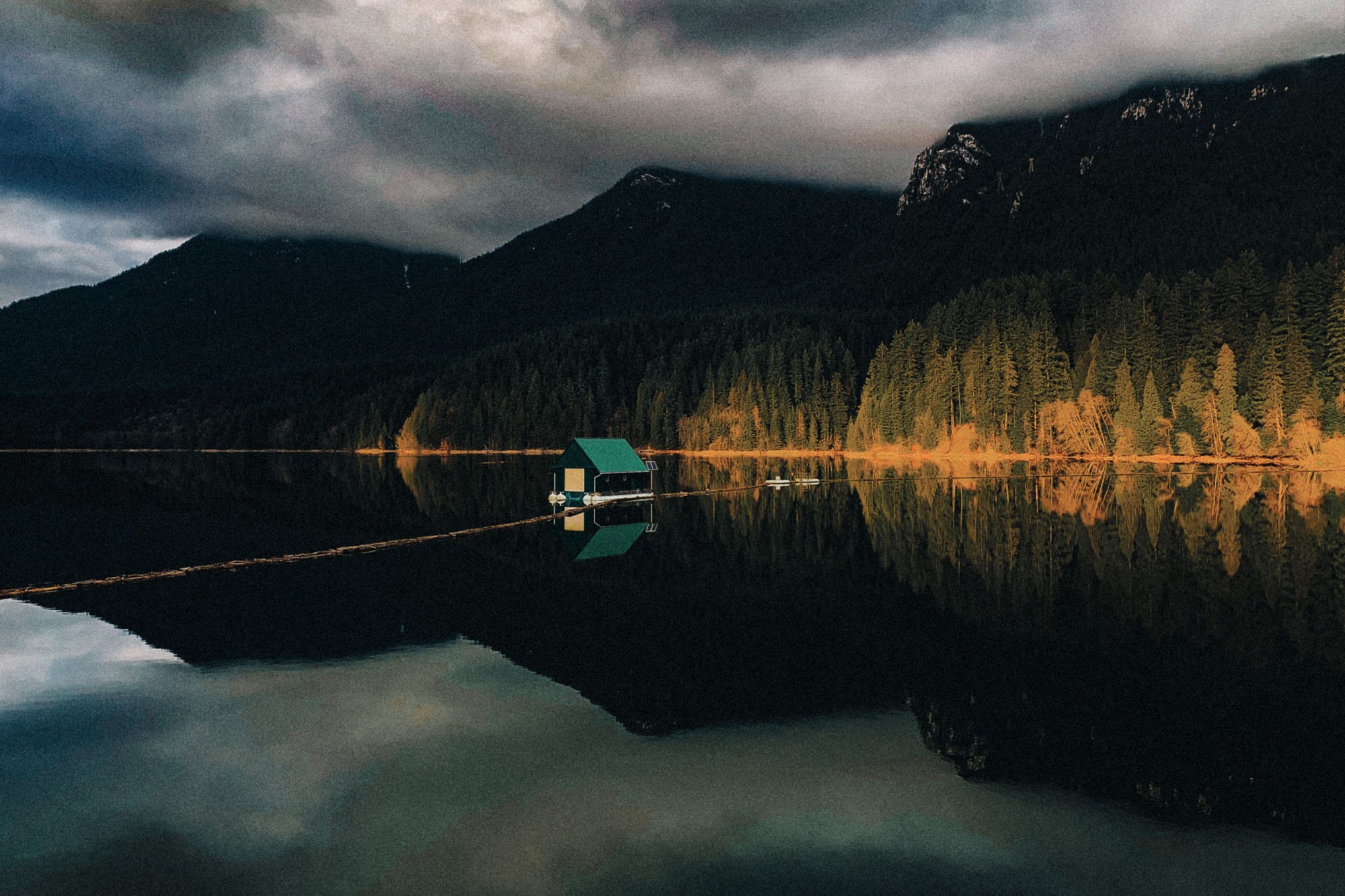
Another shot made on the outskirts of Vancouver, but before the pandemic hit. This was a lovely day where a long bus ride with friends brought us to a basin still within city limits and it was perfectly still.
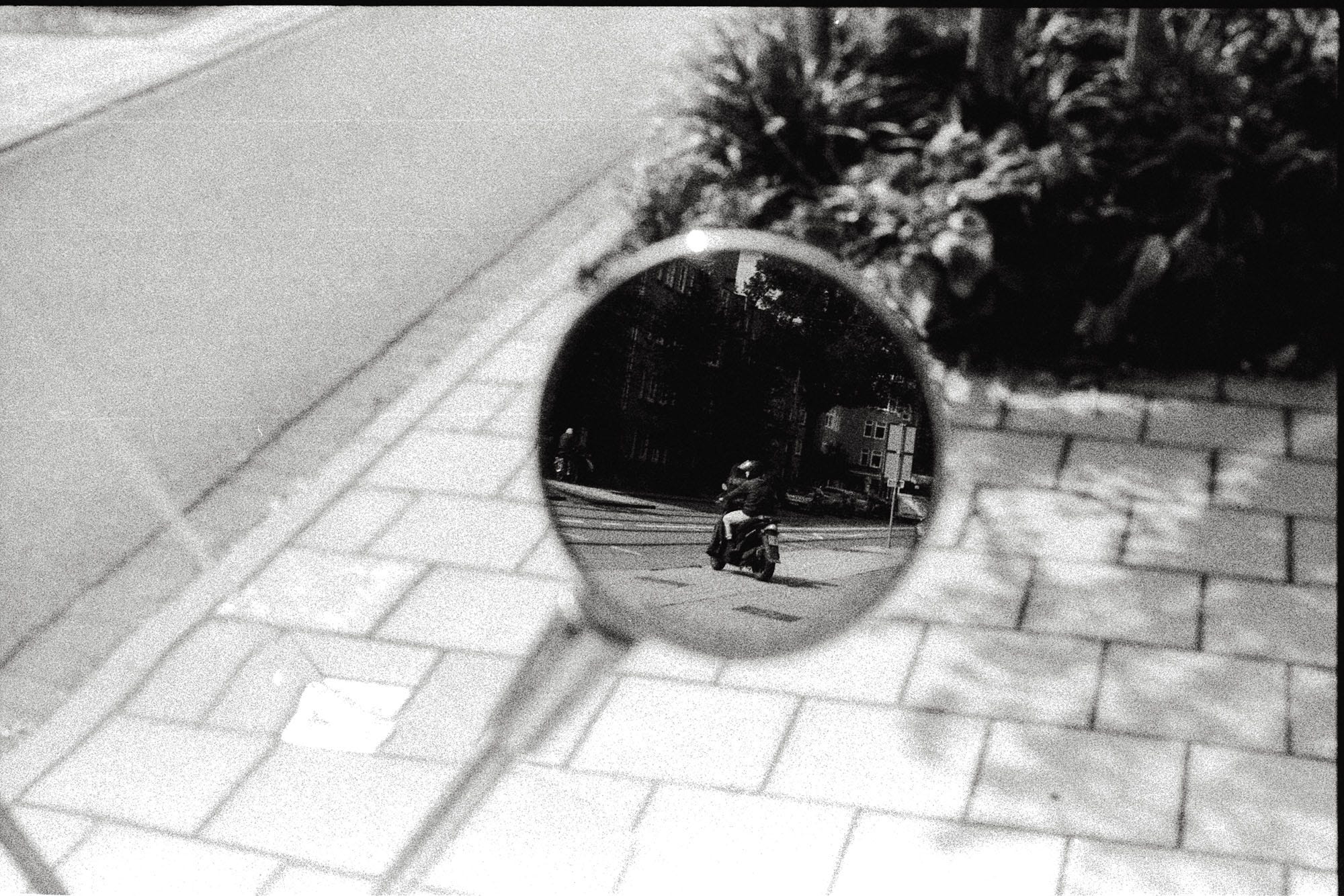
Another one of my favorite scooter mirror shots. This time a bit meta as I snapped a shot of one scooter, using the mirror of another.
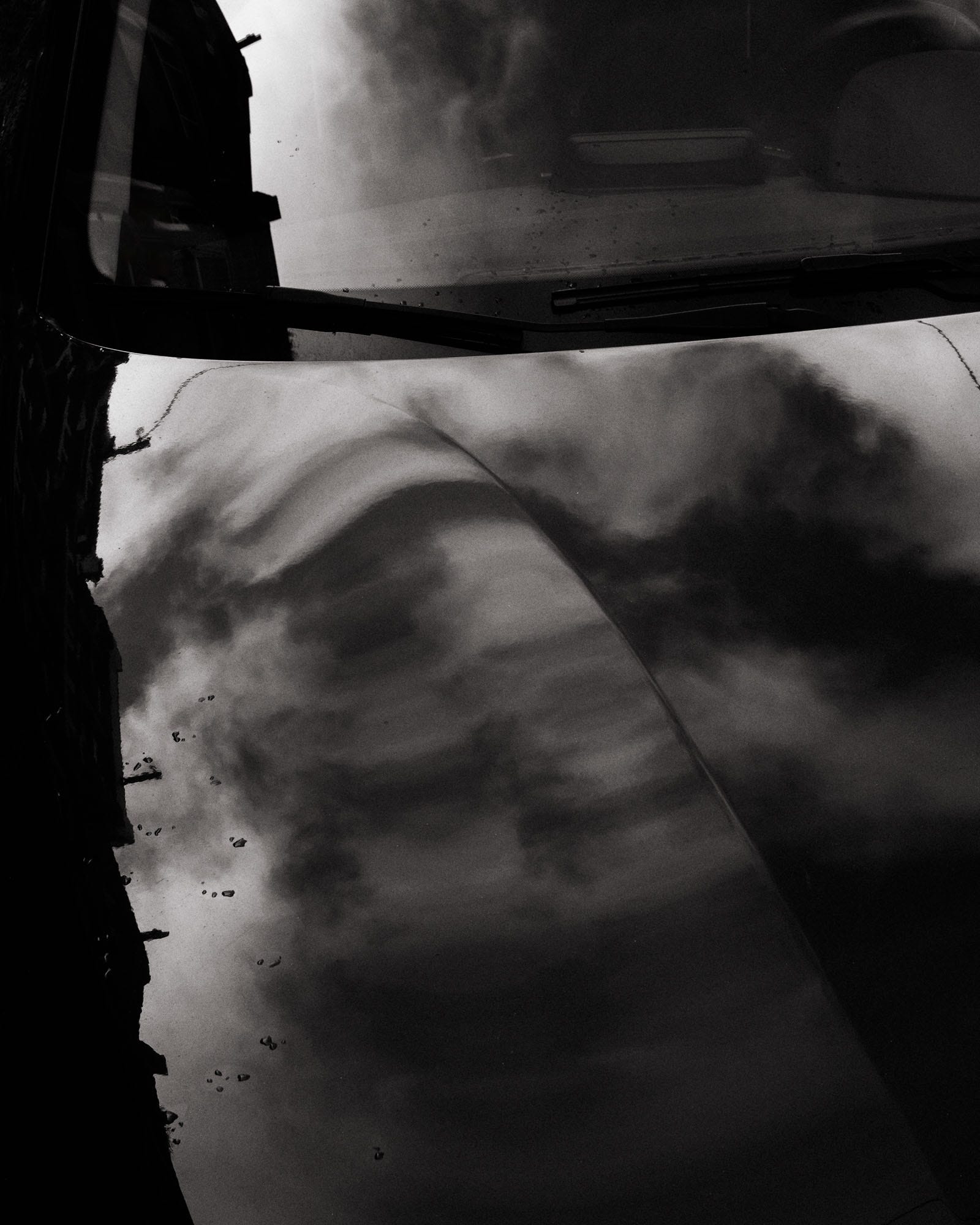
Dark fall days in Amsterdam always lead to the moodiest of images. I love how the drops of rain on the hood of this car look like surreal blips of air coming out of the chimneys on the roofs seen in this reflection.
My Thoughts On These Images
Looking at these together, I notice I’m rarely the subject, and even when I am, it’s in a pairing with someone or something else. That makes sense to me because to me the role of the photographer, at least in the way I love to be one, is to witness, interpret, re-contextualize, observe, comment, share. It’s not be center myself.
I love Varda’s line. Let’s read it one more time:
“In my films, I always wanted to make people see deeply. I don’t want to show things, but give people the desire to see.”
I hope that I inspire curiosity and a desire to see with my work. My first photo book NOTICE was a breakthrough for me because it was the first time I realized and verbalized that I like to inspire others. In this case, to slow down and notice the random bits of beauty and wonder all around us in our immediate surroundings.
It’s also what I try to do here with Process, every Sunday. Not to give you, dear reader, a thing, but to send you back into your own week looking a little more carefully and hone in on your own point of view as you notice the way a puddle reflects a building, and how your phone on the table during a dinner may catch a smile from across the table. It’s all magic to me. I hope you let it be magic to you as well. Thanks for reading.
If there’s a friend who would enjoy this issue, do me a favor and send it to them. Thank you :)
NEXT WEEK: a deeper look at my Community Documentary work, an anniversary, and previewing the upcoming two communities.
One last thing: you have one week left to preorder Process Workbook Vol. 5 at €9.99 (it goes to €14.99 on release). This one walks you through making your own zine or book. More in Quick Notes below.
Waving from springy Amsterdam, talk to you soon.
Wesley
P.S. I found this week’s images using Excire, which tags and organizes my photos locally on my computer. No uploads, no monthly subscription, no AI training on your work. I use the standalone software but they also have a Lightroom plug-in.
Excire was kind enough to sponsor this issue and offer Process readers 15% off with code PROCESS. I use it nearly every day in my workflow, not just to search my archive but also to filter duplicates out of client shoots and a bunch of other useful things. I was already using it before they sponsored Process, and they had no say in what I wrote here.
P.P.S. All my film is developed by Carmencita Film Lab. They’re the best and they clearly love what they do. Use code PROCESS for a free upgrade.
Quick Notes
GET PWB5 FREE WITH PROCESS PHOTO CLUB — Process Workbook Vol. 5: How to Make a Photo Book or Zine ships May 17th and walks you through it in 12 steps. Process Photo Club members get it free, plus all four previous workbooks (€60 in savings on day one), 40% off my photo books, 30% off workshops, and more.
Just want the workbook? Preorder for €9.99 through May 17th (€14.99 after). Background in Process issue 241.
LONDON WORKSHOP, MAY 23 — I’m teaming up with my friend Shane Taylor of Framelines for a day-long workshop in London focused on two questions: What is my unique voice? and How do I turn that into a real project?
Morning sessions, communal lunch, afternoon street shooting. €275 (£250). Info and tickets at developworkshops.com. Process Photo Club members get €75 off, just email me at hello@wesley.co for the code.
Browse the Process Archive for more articles
"Si on ouvrait les gens, on trouverait des paysages" c'est ma citiation d'Agnès Varda que je préfère. Je pose régulièrement la question du coup: quel est votre paysage intérieur ? et je joue à deviner les paysages intérieurs de mes amis...